
Johann Strauss Jr died in 1899 at age 73 of pneumonia, not a heart attack, and that may be due to his “Blue Danube Waltz” and his many other heart-healthy waltzes. Did that make Strauss the Richard Simmons of the 19th century? Well, maybe not, but Italian researchers have come up with a novel way for cardiac rehabilitation patients to exercise hearts without having to squeeze into spandex or gyrate in a gym: waltzing.
The dance proved to be just as effective as bicycle and treadmill training for improving exercise capacity in a study of 110 heart failure patients. Dancers also reported slightly more improvement in sleep, mood, and the ability to do hobbies, do housework and have sex than the others. “This may be a more effective way of getting people to exercise, and may be more fun than running on a treadmill,” said Robert Bonow, cardiology chief at Northwestern University School of Medicine. “Maybe we should try here. I’m not sure we can get Americans to waltz, but they can certainly dance.”
Exercise is crucial after people suffer heart problems, but getting people to stick with it is tough. As many as 70% drop out of traditional programmes, said Romualdo Belardinelli, director of cardiac rehabilitation at Lancisi Heart Institute in Ancona, Italy. “We have to find something that may capture the patients’ interest,” he said at an American Heart Association meeting in Chicago where he presented results of his study. They chose waltzing because it is “internationally known” and is quite aerobic, as the study ultimately verified, he said.
Even 30 minutes delay can hike death risk by 42%
Hundreds of hospitals around the country are joining the most ambitious project ever undertaken to give faster emergency room care to people suffering major heart attacks. Fewer than one-third of such patients now get their blocked arteries reopened within 90 minutes of arrival, as guidelines recommend. The risk of dying goes up 42% if care is delayed even half an hour longer.
“There’s a very, very large opportunity here to improve patient care,” said John Brush, heart specialist who helped the American College of Cardiology design the new project. Major medical groups and government agencies have endorsed the project, including the National Heart, Lung and Blood Institute, whose director, Elizabeth Nabel, called it the biggest heart care initiative since paramedics were trained to do CPR.
It targets heart attacks caused by a total or near-total blockage of a major artery that prevents enough oxygen from reaching the heart tissue. About a third of the 10 million worldwide are of this type. The preferred remedy is angioplasty, in which doctors snake a tube through a blood vessel in the groin to the blockage. A tiny balloon is inflated to flatten the crud, and a mesh scaffold called a stent usually is placed to prop the artery open. Guidelines have long called for a “doorto-balloon” time of 90 minutes, “but we just haven’t engineered our ERs to cut out some of these steps that aren’t needed” and cause delays, Nabel said.


Stem cell vaccine to kill lung cancer
Embryonic stem cells, the controversial and versatile cells that seem able to do
just about anything, have now expanded their repertoire into cancer prevention. A vaccine made from these cells shields mice against developing lung cancer under conditions thought to mimic the effects of smoking.
Safety concerns about injecting stem cells into humans mean that regulatory agencies are unlikely to approve human tests of the vaccine, says lead researcher John Eaton at the University of Louisville in Kentucky. Nevertheless, he thinks the vaccine is worth testing in people at high risk of developing
cancer, such as heavy smokers or people with certain genetic mutations.
Other researchers are more cautious. Cancer vaccines, particularly vaccines made from cells, are notoriously more effective in mice than people, says Jeffrey Weber, an immunotherapist at the University of Southern California in Los Angeles. “The idea is interesting, but the execution may be impossible,” he says.
But both Weber and Eaton agree that the finding could lead to new ways to prevent or treat cancer. Eaton’s approach was inspired by the similarities between embryos, embryonic stem cells and tumours. “Embryos and tumours both grow as balls, they derive nutrients from the host, and they both express peculiar proteins—some of them in common,” he says.
These shared proteins made Eaton think that a vaccine prompting an immune response to embryonic stem cells would also trigger an attack against tumours. He and his colleagues injected mice with stem cells and gave the mice a booster shot ten days later. The researchers then transplanted lung cancer cells under the animals’ skin — a standard animal model for the disease. The stem-cell injection protected 20 out of 25 mice from developing tumours, whereas tumours grew in all unvaccinated mice. “We were absolutely shocked,” Eaton says.
Even more effective was a mixture of stem cells and cells engineered to make a molecule that stimulates the immune system. None of the mice given this vaccine developed tumours when implanted with cancer cells.
just about anything, have now expanded their repertoire into cancer prevention. A vaccine made from these cells shields mice against developing lung cancer under conditions thought to mimic the effects of smoking.
Safety concerns about injecting stem cells into humans mean that regulatory agencies are unlikely to approve human tests of the vaccine, says lead researcher John Eaton at the University of Louisville in Kentucky. Nevertheless, he thinks the vaccine is worth testing in people at high risk of developing
cancer, such as heavy smokers or people with certain genetic mutations.
Other researchers are more cautious. Cancer vaccines, particularly vaccines made from cells, are notoriously more effective in mice than people, says Jeffrey Weber, an immunotherapist at the University of Southern California in Los Angeles. “The idea is interesting, but the execution may be impossible,” he says.
But both Weber and Eaton agree that the finding could lead to new ways to prevent or treat cancer. Eaton’s approach was inspired by the similarities between embryos, embryonic stem cells and tumours. “Embryos and tumours both grow as balls, they derive nutrients from the host, and they both express peculiar proteins—some of them in common,” he says.
These shared proteins made Eaton think that a vaccine prompting an immune response to embryonic stem cells would also trigger an attack against tumours. He and his colleagues injected mice with stem cells and gave the mice a booster shot ten days later. The researchers then transplanted lung cancer cells under the animals’ skin — a standard animal model for the disease. The stem-cell injection protected 20 out of 25 mice from developing tumours, whereas tumours grew in all unvaccinated mice. “We were absolutely shocked,” Eaton says.
Even more effective was a mixture of stem cells and cells engineered to make a molecule that stimulates the immune system. None of the mice given this vaccine developed tumours when implanted with cancer cells.
Software calculates heart attack risk
Pioneering computer software is helping doctors to decide how best to treat patients admitted to hospital with heart attacks. An international consortium of researchers, led by the University of Edinburgh, has developed a programme that enables doctors to swiftly assess the severity of a patient’s condition. The new ‘risk calculator’ is already being used in UK hospitals.
Doctors using the new system take key data from patients at their bedside, and input it into the specially-devised programme.
Key facts—such as a patient’s age, medical history and blood pressure—are recorded by doctors, as well as information derived from on-the-spot blood samples and kidney tests.
The new patient’s statistical profile is then input into a computer and matched with data derived from thousands of other coronary cases. Using the outcomes of these previous cases as a guide, the computer will not only give an accurate assessment of the new patient’s conditions, but also recommend possible treatment. Significantly, it will be able to predict the likelihood the patient suffering a heart attack, and even their chances of dying in the next months.
Chest pain accounts for more than a quarter of all emergency medical admissions in the United Kingdom. Spotting high risk heart patients quickly can be difficult, but Professor Keith Fox, of the University of Edinburgh, says the new tool will help: “Identifying those with threatened heart attack from the very many patients with chest pain is a real clinical challenge, but critically important in guiding emergency and subsequent patient care. Higher risk patients need more intensive medical and interventional treatment.”
An international group of cardiologists and statisticians have spent several years producing the Global Registry of Acute Coronary Events (GRACE) calculator. The complex statistical model has been developed using data derived from six-year study of more than 40,000 coronary patients worldwide.
Deadly LEAD
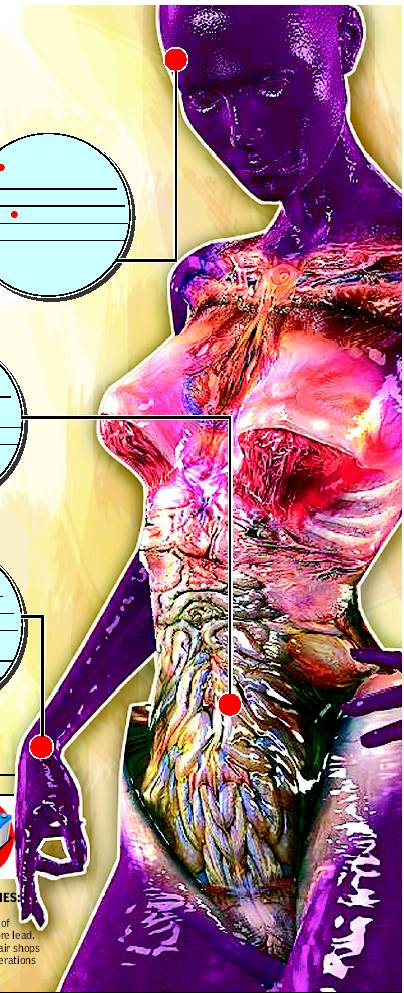
Lead poisoning occurs when a person swallows, absorbs or inhales lead in any form. The result can be damaging to the brain, nerves, and many other parts of the body. Acute lead poisoning, which is somewhat rare, occurs when a relatively large amount of lead is taken into the body over a short period of time.
DANGERS OF LEAD
It isn’t biodegradable. It persists in air, soil, drinking water and homes. It is particularly harmful to the developing brain of foetuses and young children. The higher the level of lead in a child's blood and the longer this elevated level lasts, the greater the chance of ill effects.
CHILDREN
Hyperactivity and aggressiveness Impaired growth and IQ Poor hearing Learning difficulties Damage to the brain and nervous system up to the age of 4.
PREGNANT WOMEN
Pre-term delivery Increased frequency of miscarriage, stillbirth Low birth weight Harms mental development of the foetus ADULTS Loss of appetite, anaemia Loss of libido, infertility Weakness of the limbs Aggressiveness, high BP and seizures Skin Cancer Joint Pains.
Beware of BRUSH with POISON PAINT
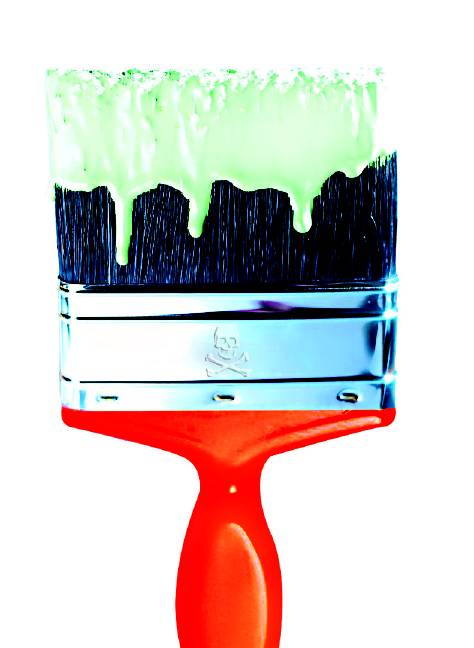
A fresh coat of paint does wonders for your home but it can also be hazardous to health — and your child’s IQ. Environmental and occupational health experts at the University of Cincinnati (UC) have found that India still produces and sells consumer paints with dangerously high levels of lead. The toxic metal, which gives paint its lustre and durability, was banned in the US in 1978 after scientific evidence proved that any detectable level of lead impairs intellectual and physical growth in children.
The UC-led research team, which published its findings in the journal Environmental Research, found that all 17 samples analysed from India had lead exceeding US limit for new paint (600 ppm). Scott Clark, who headed the two-year study, says he is concerned about kids who are currently exposed to lead in their houses and neighbourhoods and for those who will live in such places in the future.
Children ingest lead dust when they put their hands in their mouth — such as while eating or sucking their thumb. Since lead compounds used in paint taste sweet, kids tend to chew or lick them. A single chip of paint the size of a thumbnail contains 1 gm of lead and a few such chips can raise lead intake to 1,000 times the acceptable limit. There is an increased formation of lead dust during repainting or renovation of houses when existing paint is scraped or sanded.
‘‘Lead-based paints have already poisoned millions of children in the US and will likely cause similar damage in India as paint use increases,’’ says Clark. The findings, he adds, provide stark evidence of the urgent need for an effective worldwide ban on lead-based paint.
France pioneered a ban as early as the 1920s but till date, India has no such curbs in place, points out Venkatesh Thuppil, director of the National Referral Centre for Lead Poisoning. ‘‘Lead paint has a 91% market share in India. Homes, playground equipment, painted desks and chairs in schools and even the yellow school bus in which your child comes home, lead paint is everywhere,’’ says Thuppil. And it’s taking a toll. The first major study on lead poisoning in the country conducted by The George Foundation revealed that 50% of children below the age of 12 living in urban areas had high lead levels while 14% had alarmingly high levels.
According to WHO estimates, 15 to 18 million children in developing countries are suffering from permanent brain damage due to lead poisoning. Thuppil admits that the extent of poisoning from lead paint sources is not known in India. However, in one follow-up of poisoned children in Mangalore, he found that for three of the ten kids studied, lead-based paint was the only source identified. In one case, the culprit was playground equipment painted with lead paint.
Despite this, paint sold in India has no distinguishing mark to show lead content. A spokesman for leading manufacturer ICI paints, R Guha, said the company had replaced lead white with the more expensive titanium white some five to six years ago. However, its paint containers don’t advertise the fact because it’s not mandatory by law, Guha said. Smaller manufacturers make no bones about the fact that they use lead in decorative as well as industrial and automotive paints since it reduces cost by about Rs 2 to Rs 3 a litre.
‘‘There is no law against lead-based paints,’’ points out Nitin Khanna of the Indian Small Scale Paints Association. And that’s exactly what is needed, says Abhay Kumar of Toxic Links, the NGO which recently exposed the high level of lead in PVC toys. “Till there are regulations that can be enforced, lead will continue to poison our lives.”
In Mongolia, drink goat’s blood for low blood pressure
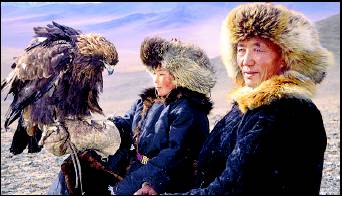
For women with sprained necks, there is a Mongolian way out... Kneel before a handsome man and place the head on his knee. And the sprain is gone. For high blood pressure, stroke a cat and eat two cloves of garlic. Two cloves of garlic is fine, but why stroke the cat?
Medicines may have made tremendous advances, but in the land of Genghis Khan, these and other traditional treatments continue to be popular in some segments of the society. “Some of the treatments are really funny. But they are still being practised in some parts of Mongolia,” says Nansaa, a University teacher. Sometimes we have a hearty laugh on some of the traditional natural treatments, she says.
Nansaa’s favourite is that of applying animal urine to an aching tooth. For a society that was largely nomadic, traditional medical solutions centred around animals. Sample this: A cup of freshly slaughtered goat’s blood is recommended for low blood pressure.
“The country has moved on and you can see many hospitals and clinics around the city. While many people are aware of these practises, you will find a few following them,” says Mendsaikhan, a doctor. But ‘arkhi’ (fermented mare’s milk) the local vodka, is considered almost an elixir for various ailments by Mongols. for instance, if an infant is suffering from pneumonia, wrapping its chest with a towel soaked in vodka is considered a sure shot treatment.
There are various other treatments that may sound really insane. And yes there is a treatment for insanity too. Drinking half a cup of fox’s warm urine. PTI UNIQUE CURES Apply animal urine to an aching tooth For women with sprained necks, kneel before a handsome man and place the head on his knee For high blood pressure, stroke a cat and eat two cloves of garlic If an infant is suffering from pneumonia, wrapping its chest with a towel soaked in vodka To treat insanity drink half a cup of fox’s warm urine
Artificial heart ready to beat in US
It Will Allow Patients To Move About For Up To Two Hours At A Time
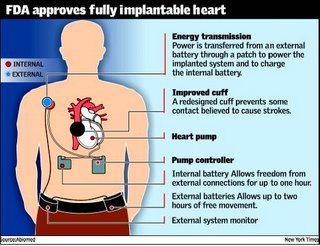
The US food and drug administration gave limited approval on Tuesday to a Massachusetts company to sell the first fully implantable artificial heart, a device that can let patients move about freely for up to two hours at a time.
The approval was given even though the grapefruit-size device was implanted in just 14 patients at four hospitals from 2001 to 2004. All of the patients, who agreed to receive the heart as an experimental device, were men, and all have died. Two died from the implant operation. A third never regained consciousness, and the rest survived an average of five months. The longest survivor lived 512 days, when the mechanical heart failed.
Nevertheless, the agency gave the company, Abiomed Inc. of Danvers, Massachusetts, a humanitarian exemption allowing it to sell up to 4,000 devices a year. The device costs $250,000. Earlier devices were much larger and intended as a bridge to heart transplants. The drug agency has approved a modified version of the heart as a bridge to a transplant. The agency has also approved a partial mechanical heart known as a ventricular assist device for permanent use.
The titanium and plastic Abiomed device can be used just in patients who are near death from the failure of both of the natural heart’s pumping chambers. The device can be implanted only in people 18 and older who are ineligible for a transplant and whose life expectancy would be a month without it.
The diseased heart is removed to make room for the two-pound device. Implanted, a coil transfers power across the skin and recharges the device from the outside. An internal battery and a controller that monitors and controls the heart rate are implanted in the abdomen. The battery allows the recipient to be free from all external connections for up to one hour. Two external batteries allow free movement for up to two hours. But it’s size limits its use to men and women with relatively large chest cavities.
‘Virtually untreatable’ form of TB found
A “virtually untreatable” form of TB has emerged, according to the World Health Organisation (WHO). Extreme drug resistant TB (XDR TB) has been seen worldwide, including in the US, Eastern Europe and Africa. Dr Paul Nunn, from the WHO, said a failure to correctly implement treatment strategies was to blame. TB experts have convened in Johannesburg to discuss how to address the problem. Drug resistance is caused by poor TB control, through taking the wrong types of drugs for the incorrect duration. Multi-drug resistant TB (MDR TB), which describes strains of TB that are resistant to at least two of the main first-line TB drugs, is already a growing concern.
Globally, the WHO estimates there are about 425,000 cases of MDR TB a year, mostly occurring in the former Soviet Union, China and India.Treatment requires the use of second-line drugs, which are more toxic, take longer to work and costly. But now, according to researchers, an even more deadly form of the bacteria has emerged. XDR TB is defined as strains that are not only resistant to the front-line drugs, but also three or more of the six classes of second-line drugs. This, Dr Nunn says makes it virtually untreatable.
A recent survey of 18,000 TB samples by the US-based Centers for Disease Control and the WHO between November 2004 and November 2005 found 20% of them were multi-drug resistant and a further 2% were extreme drug resistant. Further detailed analysis of several countries found the prevalence was even higher.
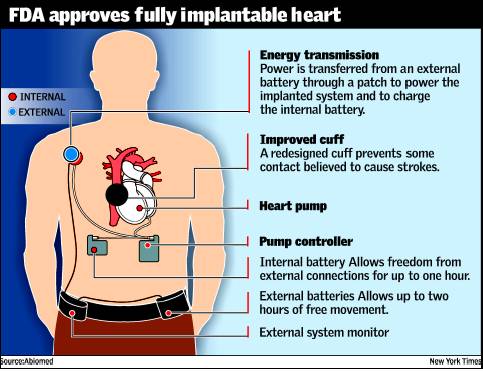
The US food and drug administration gave limited approval on Tuesday to a Massachusetts company to sell the first fully implantable artificial heart, a device that can let patients move about freely for up to two hours at a time.
The approval was given even though the grapefruit-size device was implanted in just 14 patients at four hospitals from 2001 to 2004. All of the patients, who agreed to receive the heart as an experimental device, were men, and all have died. Two died from the implant operation. A third never regained consciousness, and the rest survived an average of five months. The longest survivor lived 512 days, when the mechanical heart failed.
Nevertheless, the agency gave the company, Abiomed Inc. of Danvers, Massachusetts, a humanitarian exemption allowing it to sell up to 4,000 devices a year. The device costs $250,000. Earlier devices were much larger and intended as a bridge to heart transplants. The drug agency has approved a modified version of the heart as a bridge to a transplant. The agency has also approved a partial mechanical heart known as a ventricular assist device for permanent use.
The titanium and plastic Abiomed device can be used just in patients who are near death from the failure of both of the natural heart’s pumping chambers. The device can be implanted only in people 18 and older who are ineligible for a transplant and whose life expectancy would be a month without it.
The diseased heart is removed to make room for the two-pound device. Implanted, a coil transfers power across the skin and recharges the device from the outside. An internal battery and a controller that monitors and controls the heart rate are implanted in the abdomen. The battery allows the recipient to be free from all external connections for up to one hour. Two external batteries allow free movement for up to two hours. But it’s size limits its use to men and women with relatively large chest cavities.
‘Virtually untreatable’ form of TB found
A “virtually untreatable” form of TB has emerged, according to the World Health Organisation (WHO). Extreme drug resistant TB (XDR TB) has been seen worldwide, including in the US, Eastern Europe and Africa. Dr Paul Nunn, from the WHO, said a failure to correctly implement treatment strategies was to blame. TB experts have convened in Johannesburg to discuss how to address the problem. Drug resistance is caused by poor TB control, through taking the wrong types of drugs for the incorrect duration. Multi-drug resistant TB (MDR TB), which describes strains of TB that are resistant to at least two of the main first-line TB drugs, is already a growing concern.
Globally, the WHO estimates there are about 425,000 cases of MDR TB a year, mostly occurring in the former Soviet Union, China and India.Treatment requires the use of second-line drugs, which are more toxic, take longer to work and costly. But now, according to researchers, an even more deadly form of the bacteria has emerged. XDR TB is defined as strains that are not only resistant to the front-line drugs, but also three or more of the six classes of second-line drugs. This, Dr Nunn says makes it virtually untreatable.
A recent survey of 18,000 TB samples by the US-based Centers for Disease Control and the WHO between November 2004 and November 2005 found 20% of them were multi-drug resistant and a further 2% were extreme drug resistant. Further detailed analysis of several countries found the prevalence was even higher.
Subscribe to:
Posts (Atom)